
Circular Solutions Create New Business Opportunities and Strengthen Competitiveness
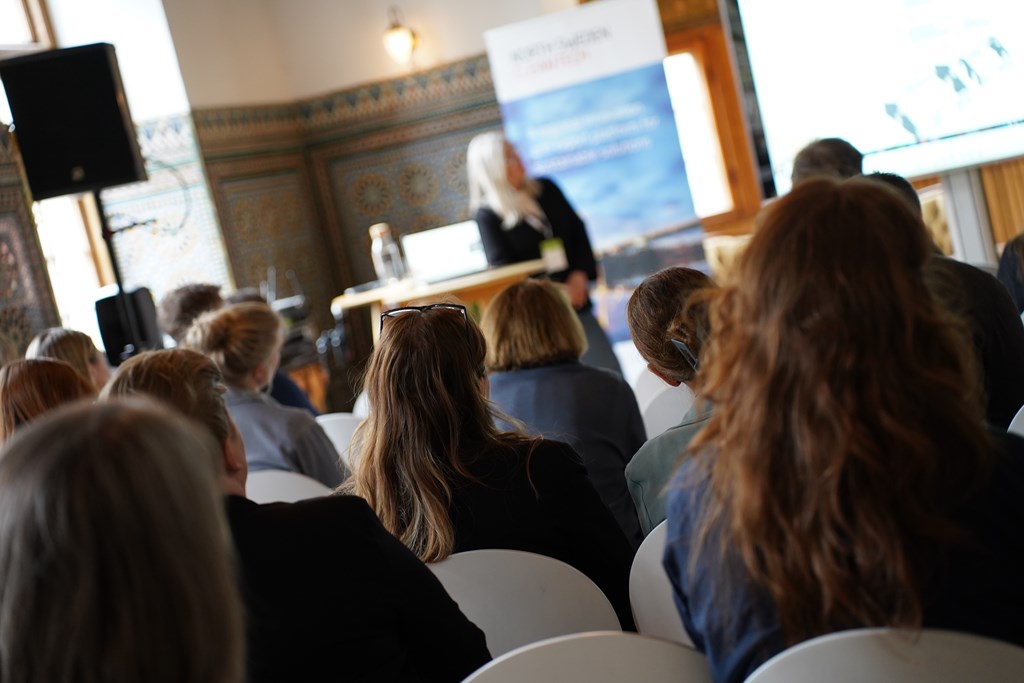
How can we create more value from the resources already available? That was the common thread when companies, researchers and public sector representatives gathered in Umeå for a circular networking event focused on business opportunities. Throughout the day, concrete examples highlighted how circular solutions can reduce resource use, strengthen resilience and create new business opportunities at the same time.
From Linear Systems to Circular Value Creation
One of the key topics during the event was the significant value lost in today’s linear systems. Malin Orebäck from RE:Source presented the report Circularity Gap Report: The Value Gap Sweden, which shows that we are still far from utilising the full potential of materials. The report shifts the focus from material volumes to the economic value lost when resources are not reused or kept in circulation.
At the same time, it became clear that the transition is already underway – and that many companies are developing solutions where circularity is part of the core business model.
Buildings Designed for Reuse
Within the construction sector, discussions focused on how materials can be used for longer, reused and designed for future disassembly from the very beginning. ABC Umeå highlighted the importance of collaboration between actors to create functioning circular systems in practice.
"We cannot do this alone; we depend on each other’s residual flows,” said Maja Hallén, architect at Nordmark & Nordmark and project manager for ABC Umeå.
IsoTimber presented how its timber building system is being developed with a focus on low climate impact, material efficiency and reuse. By designing for disassembly, buildings can retain their value even after their first use.
“We need to think about how we design today in order to reuse tomorrow,” said Douglas Bjelkström, CEO of IsoTimber
Residual Flows as New Resources
The food sector was also highlighted as an area with major potential. The panel discussion featured examples of how residual flows can become new products, raw materials and business opportunities. At the same time, the importance of business models and economic incentives for scaling solutions was emphasised.
"It is not difficult to gather partners, but it is important that everyone in the value chain benefits and that there is a long-term plan,” said Anna-Karin Karlsson, Market Manager at RISE
Olivier Keech, founder of Synthorpix and researcher at Umeå University also stressed the importance of solutions that are both sustainable and economically competitive.
Throughout the day, one message kept returning: circular solutions are about more than sustainability. They are about smarter resource use, new collaborations and long-term competitive business opportunities.
Photo: Lisa Stenvik, RISE
Click here to learn more about Circularity Gap Report - Value Gap Sweden!