
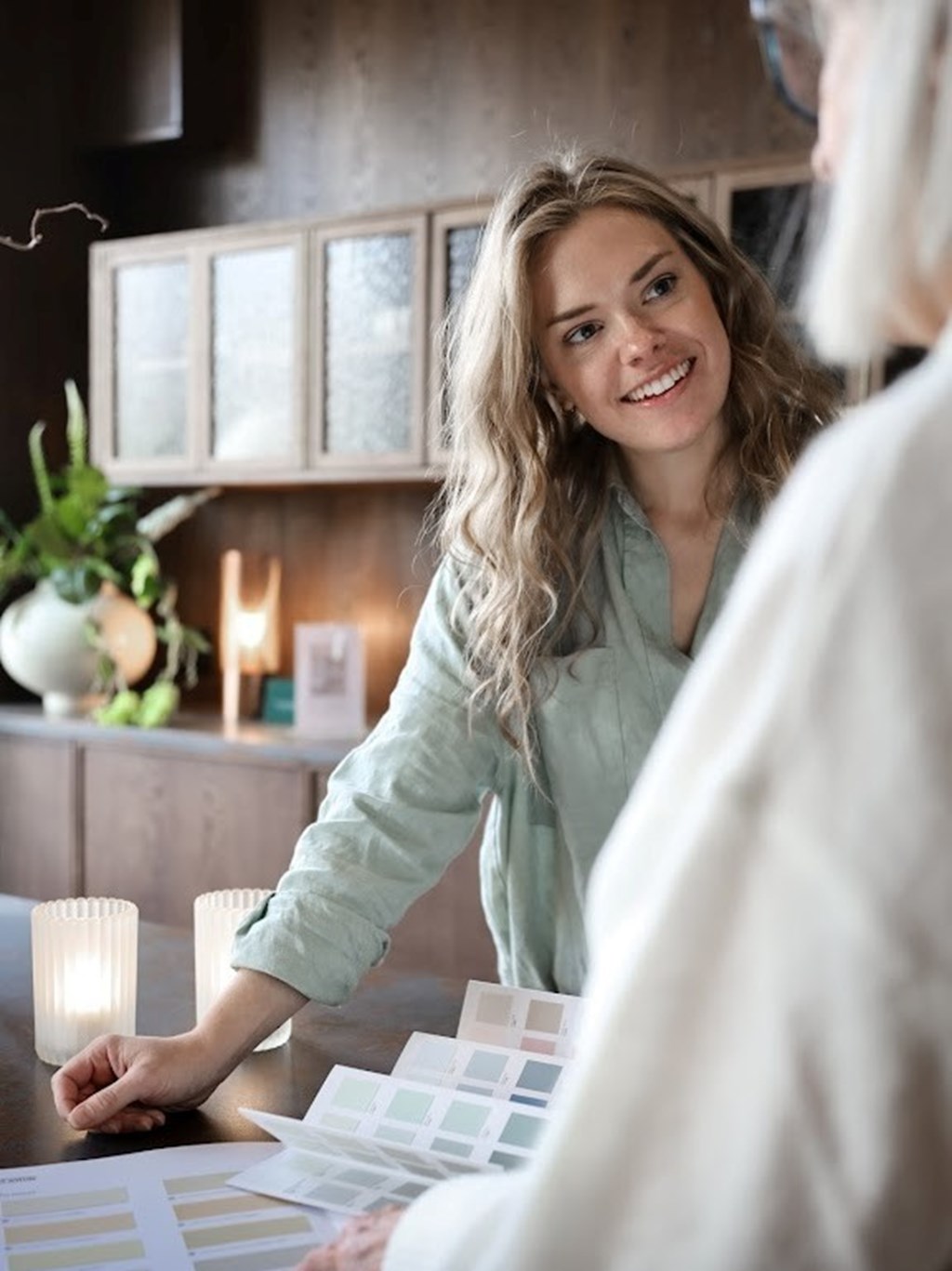
Reuse Starts On Site With Lotta At RECY Interior
When companies renovate their premises, large amounts of fully functional furniture are often discarded. At the same time, new items are purchased – sometimes with a shorter lifespan than those being replaced. For Lotta Edlund, founder of RECY Interior outside Örnsköldsvik in northern Sweden, this became the starting point for her business.
– When you renovate a kitchen or office space, you realise how much material is discarded despite still being fully usable. I started to see it as resources rather than waste, she says.
RECY Interior was founded in autumn 2024 and works with circular interior solutions for offices and commercial spaces. The idea is to combine reuse with thoughtful design and functional work environments.
– Interior design may sound superficial, but it’s really about how people function in a space. The environment should support what you do there – whether it’s focus, collaboration or recharging, says Lotta.
Thoughtful planning enables a high level of reuse without compromising function or the work environment.
She has a background in engineering and has long worked with both technical and creative projects. Starting her own business made it possible to combine the two.
"I've always had a drive to develop and improve things. Running my own company allows me to set the direction and work with real change".
So far, the company has worked on both small and large projects, but larger spaces are of particular interest.
"That's where the climate impact lies. When offices or shared spaces are refurbished, enormous amounts of furniture and materials are discarded. At the same time, companies pay to dispose of items that are often of very high quality", says Lotta.
Can a Piece of Furniture Serve a New Purpose?
A typical project begins with a needs analysis to understand how spaces are used and what the organisation aims to achieve. This is followed by an inventory phase – a key step in reuse projects – where furniture and materials are assessed to determine what can be kept, upgraded or repurposed. This becomes the foundation for the new overall solution.
"In many cases, there are sturdy chairs or tables that just need refreshing. That way, you can renew the entire space while making use of what you already have", says Lotta.
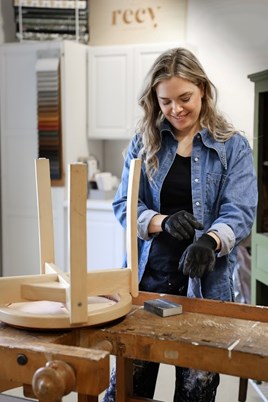
Upgrading existing furniture can reduce both climate impact and costs.
Clients come in with different needs – sometimes financial, sometimes related to climate targets or workplace conditions. Most projects, however, end up addressing all three.
"Some organisations may have a purchasing freeze where reuse is an exception. That makes it a financial issue initially. But as we start discussing the project, clients often see the environmental and functional benefits as well", says Lotta.
Measurable Impact
RECY Interior works to make climate benefits measurable. In proposals and project reports, climate impact is calculated in carbon dioxide equivalents.
"It becomes very clear for the client when you can show a number. A reused office chair, for example, results in around 80–90 percent lower climate impact compared to a newly produced one – even after refurbishment. Typically, around 70 percent of the inventory in my projects is reused. It's a relatively simple measure with a significant effect", says Lotta.
Lotta describes her approach as human-centred design, where the layout of a space is intended to support the organisation.
"It's about creating environments where people perform at their best. This includes everything from acoustics and access to daylight to how the layout influences concentration and collaboration".
She often draws inspiration from nature and how people respond to natural environments.
"The signals our bodies give us in nature are a clear indicator of which environments make us feel comfortable and well. I try to bring that feeling into my projects. Interior design is a tool to achieve the right outcomes in a space", she says.
Sustainability at the Core
In addition to project work, RECY Interior also works with the Hållbar Interiör certification, where Lotta is a trained HI coach. The model provides companies with a structured way to work with sustainability in their premises.
"Many companies work sustainably in their operations but overlook their physical spaces. There are significant opportunities here to reduce climate impact, especially through reuse".
Sustainability is a natural part of the business.
"I love creating beautiful environments, but I couldn't do it the traditional way knowing there are better ways to use resources", says Lotta.