
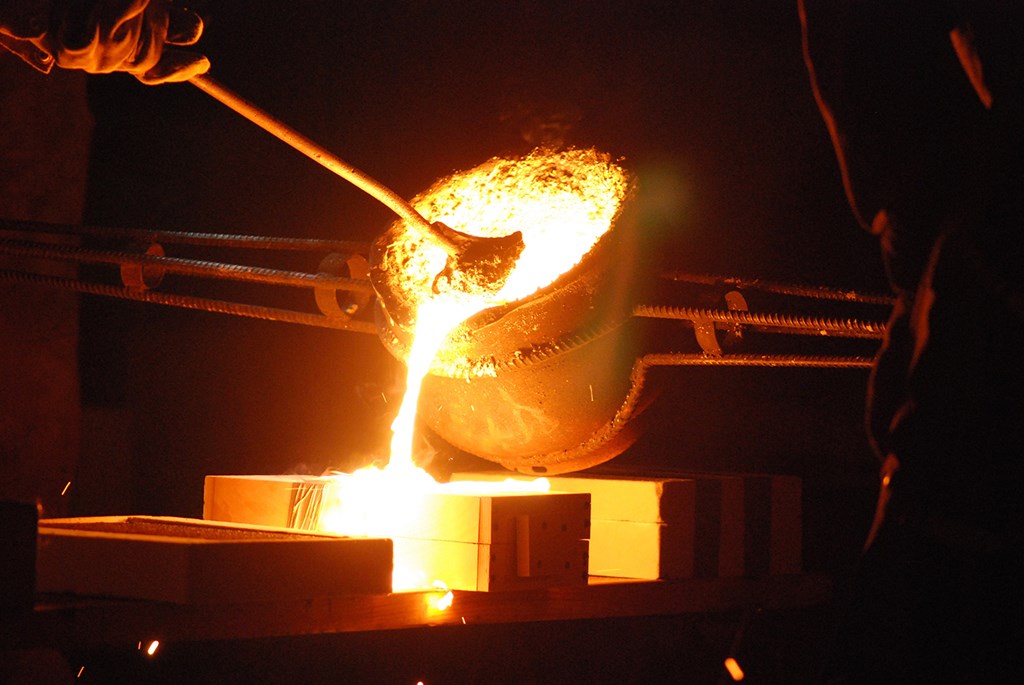
Västerbotten Foundries Test Biochar as an Alternative to Fossil Carbon
Norrlandsgjuteriet and Kåge Gjutmek in Västerbotten have successfully tested metallurgical biochar made from Swedish forest biomass in their production processes. The trials show that biochar can replace fossil carbon and graphite, offering the potential to reduce both the climate impact of production and reliance on imported raw materials.
Carbon and graphite are essential inputs for the metallurgical industry and are currently largely imported from other parts of the world. Through the HOME project, the two foundries have worked with IVL Swedish Environmental Research Institute, Swerim and Envigas to explore the potential of using metallurgical biochar produced from Swedish forest biomass as an alternative.
“Thanks to Sweden’s electricity mix, the Swedish foundry industry is already at the forefront when it comes to low carbon emissions. At the same time, there are opportunities to further reduce its climate impact, and it is encouraging that the project demonstrates concrete pathways towards even more climate-smart production,” says Karin Ågren, Project Manager at IVL Swedish Environmental Research Institute.
Domestic Raw Materials Could Reduce Reliance on Imports
For Norrlandsgjuteriet and Kåge Gjutmek, the trials mean that a bio-based alternative has now been tested in actual production. At the same time, producing an important industrial input from Swedish forest biomass could contribute to more resilient supply chains.
“This is about much more than replacing fossil carbon with biochar. We are showing that industrial competitiveness, security of supply and the green transition can be combined in the same solution,” says Peter Göttfert, CEO of Norrlandsgjuteriet.
The results demonstrate how Swedish forest biomass could find a new use in industrial processes that currently rely on fossil-based carbon materials. In the longer term, the findings could also be relevant to other parts of the metallurgical industry.
“In the long term, the technology could be relevant to a wide range of industries that use carbon-based materials in their production processes, from foundries and steelworks to defence-related production and other industries that are critical to society,” says Karin Ågren.